Home › Blog › Why Do Teeth Become Sensitive? Causes and Solutions
Oral HealthWhy Do Teeth Become Sensitive? Causes and Solutions
June 20, 2026
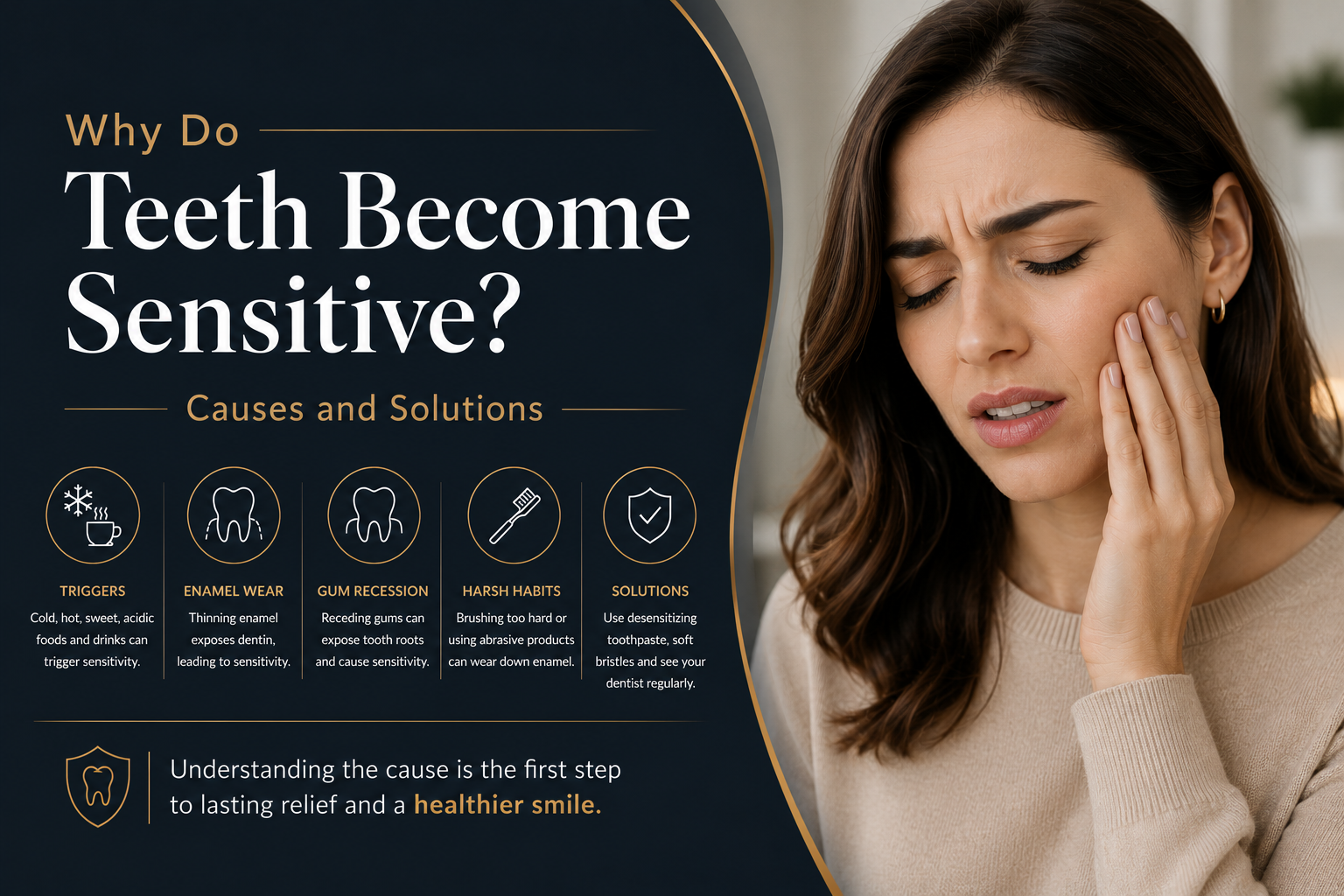
Tooth sensitivity is one of the most common dental problems affecting millions of people worldwide. If you experience sharp pain or discomfort when consuming hot, cold, sweet, or acidic foods and beverages, you may be suffering from sensitive teeth.
While occasional sensitivity may seem harmless, persistent discomfort can indicate an underlying dental issue that requires professional attention. Understanding the causes of tooth sensitivity and available treatment options can help you protect your oral health and enjoy daily life without pain.
What Is Tooth Sensitivity?
Tooth sensitivity, also known as dentin hypersensitivity, occurs when the protective layers of the tooth become weakened or damaged, exposing the underlying dentin. Dentin contains microscopic channels that connect to the nerve inside the tooth.
When hot, cold, sweet, or acidic substances reach these channels, they stimulate the nerve and cause sudden pain or discomfort.
Common Causes of Tooth Sensitivity
1. Enamel Erosion
Tooth enamel is the hard outer layer that protects your teeth. Over time, enamel can wear away due to:
Frequent consumption of acidic foods and drinks
Carbonated beverages
Citrus fruits
Acid reflux
Aggressive tooth brushing
As enamel becomes thinner, teeth become more vulnerable to sensitivity.
2. Gum Recession
Healthy gums protect the roots of your teeth. When gums recede due to aging, periodontal disease, or improper brushing techniques, the tooth roots become exposed.
Since roots are not covered by enamel, they are significantly more sensitive to temperature changes and external stimuli.
3. Tooth Decay
Cavities can damage the tooth structure and expose sensitive areas. Sensitivity caused by decay is often accompanied by discomfort when chewing or eating sweet foods.
Early treatment can prevent further damage and reduce pain.
4. Teeth Grinding (Bruxism)
Many people grind or clench their teeth while sleeping without realizing it.
This habit can:
Wear down enamel
Create micro-cracks in teeth
Increase sensitivity
Cause jaw discomfort
Night guards can help protect teeth from further damage.
5. Recent Dental Treatments
Temporary sensitivity may occur after:
Teeth whitening procedures
Dental fillings
Veneers
Crowns
Professional cleanings
In most cases, this sensitivity disappears within a few days.
6. Cracked or Damaged Teeth
Small cracks in a tooth can expose deeper layers and allow temperature changes to reach the nerve.
Patients often experience sharp pain when biting or consuming cold beverages.
Symptoms of Tooth Sensitivity
Common signs include:
Sharp pain when drinking cold water
Discomfort when consuming hot coffee or tea
Sensitivity to sweet foods
Pain when brushing teeth
Occasional discomfort while breathing cold air
Symptoms may affect one tooth or multiple teeth.
How Is Tooth Sensitivity Diagnosed?
A dentist will perform a thorough examination to determine the underlying cause.
This may include:
Visual dental examination
Digital X-rays
Gum health assessment
Bite analysis
Evaluation of enamel wear
Proper diagnosis is essential because sensitivity can sometimes be a symptom of a more serious dental problem.
Treatment Options for Sensitive Teeth
Desensitizing Toothpaste
Specially formulated toothpaste can block pain signals and reduce sensitivity over time.
Many patients notice improvement after several weeks of consistent use.
Fluoride Treatments
Professional fluoride applications help strengthen enamel and reduce sensitivity.
This treatment is quick, painless, and highly effective for mild to moderate cases.
Gum Disease Treatment
If gum recession is the cause, periodontal therapy may be recommended to improve gum health and protect exposed roots.
Dental Fillings or Bonding
When sensitivity is caused by cavities or worn areas, composite bonding or fillings can restore the tooth structure and eliminate discomfort.
Night Guards
For patients who grind their teeth during sleep, custom-made night guards can prevent further enamel wear and protect teeth.
Dental Crowns or Veneers
In cases of severe enamel loss or tooth damage, restorative treatments may provide long-term protection and relief.
How to Prevent Tooth Sensitivity
You can reduce your risk of developing sensitive teeth by:
Brushing gently with a soft-bristled toothbrush
Using fluoride toothpaste
Limiting acidic foods and beverages
Wearing a night guard if you grind your teeth
Maintaining regular dental checkups
Treating gum disease early
Avoiding excessive teeth whitening treatments
When Should You Visit a Dentist?
If tooth sensitivity lasts longer than a few days or becomes increasingly painful, professional evaluation is recommended.
Persistent sensitivity can be a warning sign of:
Tooth decay
Gum disease
Cracked teeth
Enamel erosion
Dental infection
Early diagnosis can prevent more complex and costly treatments in the future.
Final Thoughts
Tooth sensitivity can range from a minor inconvenience to a sign of an underlying dental condition. Fortunately, modern dentistry offers numerous solutions to relieve discomfort and restore oral health.
If you are experiencing sensitive teeth, a comprehensive dental examination can identify the cause and help determine the most effective treatment plan. With proper care and preventive measures, you can enjoy your favorite foods and drinks without pain while maintaining a healthy, confident smile.